Negotiated, Signed, Lost: How Manufacturers Recover 1–2% of Their Spend
Knowledge

The Silent Margin Gap: When Contracts Lose Money After Signature
Procurement celebrates the deal, management books the savings. Then the real problem begins. According to research by World Commerce & Contracting, poor contract management costs companies around 9% of their bottom line, and Deloitte puts the loss at 8.6% of contract value. Not through bad negotiations, but through missing execution: invoices that deviate from contract prices, surcharges that were never agreed, terms that simply go unchecked in daily operations.
In manufacturing, this weighs particularly heavily. Procurement makes up the largest share of the cost base, and supplier contracts are among the most complex anywhere: framework agreements with price tiers, index clauses, Incoterms, payment terms, delivery tolerances, and penalties.
That complexity is precisely why the gap exists. No buyer can manually check thousands of contract terms against millions of invoice lines. AI agents can.
The Anatomy of Value Leakage: What Goes Wrong Between Contract and Invoice
In practice, value disappears in very concrete, recurring patterns:
Price deviations between contract, purchase order, and invoice: Wrong unit prices, outdated price lists, deviations from the agreed rate card, at both PO and invoice level.
Unallowed surcharges: Energy, freight, or small-quantity surcharges that were never agreed in the contract appear on the invoice and get paid.
Deviating payment terms and Incoterms: Invoices apply shorter payment terms or different delivery conditions than the contract stipulates. Costs and risks quietly shift to the buyer.
Delivery performance without consequences: Committed lead times are missed, over- and under-deliveries exceed agreed tolerances, and contractual entitlements such as late-delivery penalties go unclaimed.
On top of that come losses that are harder to pin down, such as index adjustments never passed on or bonuses that quietly expire. Significant in total, but not even measured in most organizations.
The common denominator: all of this value has already been negotiated and contractually secured. This is not about finding new savings, it is about finally realizing existing ones.
What 1–2% Means for a Manufacturer
Take a manufacturing company of the kind we typically see in projects: around €800M in direct spend, roughly 2,000 active supplier contracts, plus logistics and service agreements.
The WorldCC and Deloitte benchmarks mark the upper bound of what can be lost, at 8–9% of contract value. A portion of that is realistically addressable. Even a deliberately conservative recovery of 1–2% of spend means €8–16M per year for this company:
Leakage source | Annual impact | Typical pattern |
Price deviations to contract (PO and invoice level) | €3.5M | Wrong unit prices, outdated prices, rate card discrepancies |
Unallowed surcharges | €2.0M | Energy, freight, and small-quantity surcharges never agreed |
Deviating payment terms and Incoterms | €1.5M | Invoices deviate from agreed conditions |
Delivery performance: delays, over-/under-delivery | €1.5M | Tolerances exceeded, late-delivery penalties unclaimed |
For perspective: to generate €6M of additional profit through new business, this company would need to build €120M of revenue at a 5% EBIT margin. Enforcing already-negotiated terms is by far the fastest profit lever, without a single new negotiation.
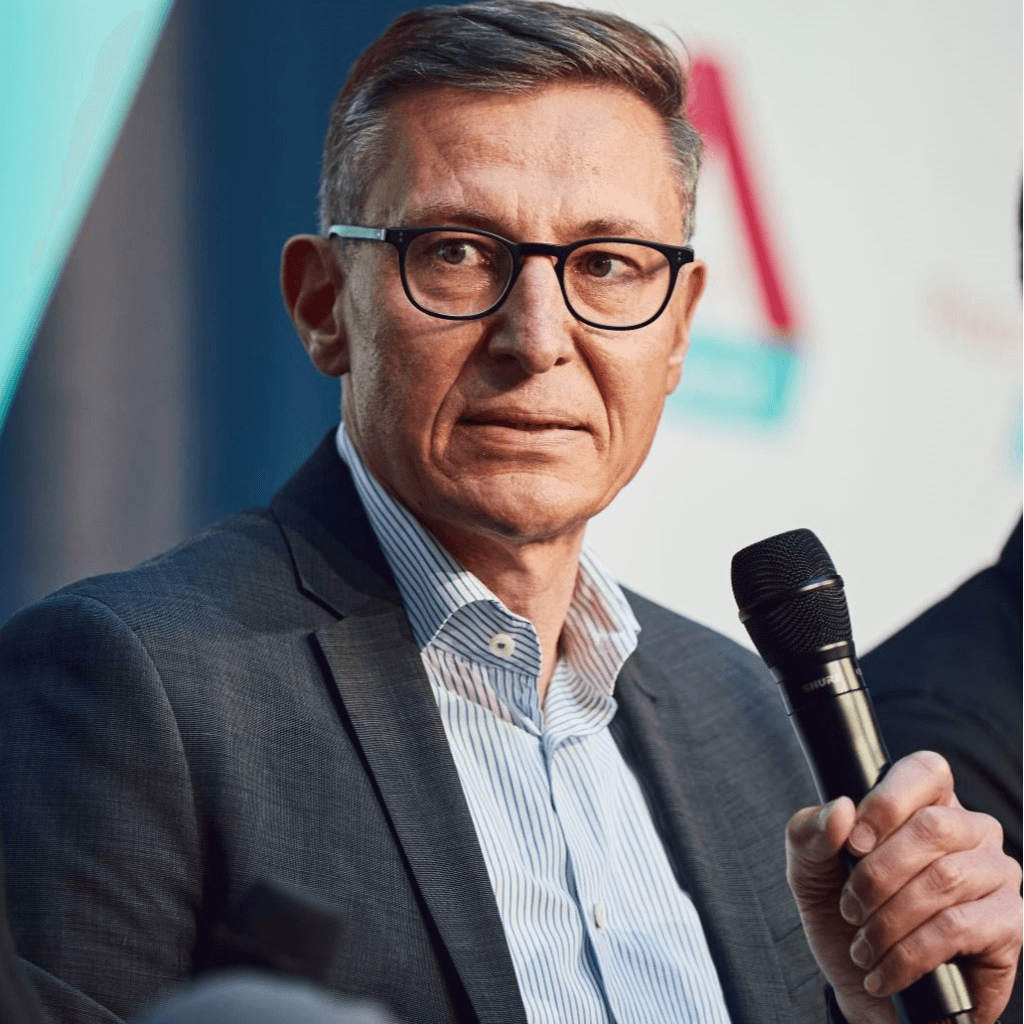
"A major problem in purchasing is the correct implementation of complex contractual terms and conditions. It is often difficult to keep track of every index price, every discount scale, and every service level clause. qado's AI helps us create transparency and gives us the assurance that no negotiated values are lost and that price reductions and contractual penalties are claimed automatically."
Klaus Linderich
Head of Procurement & Supply Chain
How Techem surfaces overspending, enforces contract clauses automatically, and equips negotiation teams with facts.
Why ERP Systems and Contract Repositories Don't Solve This
The obvious objection: "That's what we have SAP for." But that is exactly the problem. Complex terms such as tiered prices, surcharge rules, or Incoterm and payment agreements across hundreds of contracts can only be represented in simplified form in ERP pricing conditions. What cannot be modeled gets approximated or omitted. The ERP thus creates a false sense of security: the invoice matches the purchase order, but the purchase order long since stopped matching the contract.
Traditional contract repositories, in turn, know what was agreed but not whether it happens. The gap sits exactly in between: between contract clause and transaction data.
How AI Agents Close the Gap
qado operates at precisely this intersection, with AI agents that treat contracts not as static documents, but as enforceable rulebooks continuously checked against what actually happens in your systems.
1. Contracts become readable for the whole organization
qado extracts the commercially relevant terms from existing contracts: prices and tiers, payment terms, Incoterms, delivery tolerances, penalty provisions, notice periods. Contracts become a searchable knowledge source for procurement, finance, and business units, and risks are flagged automatically.
2. Overspending becomes visible, invoice by invoice
The core: qado runs a 4-way check, contract against purchase order against goods receipt against invoice, and detects where reality deviates from the contract. Concretely:
Price deviations at PO and invoice level, including wrong unit prices and rate card violations
Surcharges that were never contractually agreed
Deviating payment terms and Incoterms
Committed vs. actual lead times, and over-/under-deliveries outside agreed tolerances, including the evidence base to claim entitlements such as late-delivery penalties
Every deviation becomes a concrete, quantified case instead of a vague suspicion, traceable per invoice, per clause, per supplier.
3. Processes run automatically
Copying information from one system to another doesn't move the needle. qado automates routine checks and claims preparation so the team can focus on supplier relationships and strategy.
The Path to Results
Integration with existing systems such as SAP, Coupa, or Ivalua runs on standardized modules, with go-live possible in about two weeks. The first enforceable deviations emerge during the retroactive review of recent invoice periods, after which every new invoice is checked continuously.
Conclusion: The Fastest Margin Is in Contracts You Already Have
The gap between negotiated and realized contract value is not a law of nature. It is the result of a complexity that was unmanageable by hand. For industrial companies with significant direct spend, systematically checking invoices against contracts is the fastest, lowest-risk profit lever there is: no new negotiations, no supplier switches, no revenue growth required.
The question is not whether your contracts are leaking value. The question is how much, and how fast you get it back.

What does qado find in your contracts?
In 30 minutes we will show you, on a real example, where negotiated savings are leaking.